
Key Takeaways
- 515,000 people are waiting for employment tribunal hearings, with open cases up 33% year-on-year
- Tribunals received 26,000 new claims but only disposed of 10,000 cases in Q2 2025
- Average wait time is now 12-18 months, and the Employment Rights Act 2025 will add millions more potential claimants
At Breaking Point
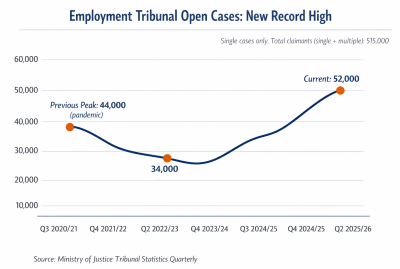
The employment tribunal system has reached a breaking point. Official figures published in December 2025 reveal that more than half a million people are now waiting for their cases to be heard, with 515,000 open claimants across single and multiple claims at the end of September 2025.
This isn’t just a statistic. Behind every number is someone who’s been dismissed, discriminated against, or cheated out of wages. They’re stuck in legal limbo, often for well over a year, while their former employer drags its feet and witnesses’ memories fade.
The Numbers Are Staggering
The Ministry of Justice data shows 52,000 open single cases at the end of Q2 2025/26, a 33% increase year-on-year. This smashes the previous peak of 44,000 recorded during the pandemic in Q3 2020/21.
What’s worse is the imbalance between new claims and resolutions. Between July and September 2025, employment tribunals received 26,000 new claims but only disposed of 10,000 cases. For every case resolved, more than two new ones enter the system.
Unfair dismissal claims make up 23.7% of new cases, followed by disability discrimination at 14.8% and unauthorised deductions from wages at 12.2%. Discrimination claims as a whole now account for 35% of all tribunal cases, up from 29.7% the previous year.
Why This Matters
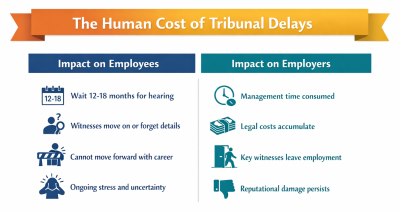
The backlog isn’t an administrative inconvenience. It’s a denial of justice. When cases routinely take 12 to 18 months to reach a hearing, several things happen, none of them good.
First, witnesses leave. In employment cases, witnesses are often colleagues who move on to new jobs. By the time a hearing comes around 18 months later, these witnesses may have forgotten crucial details or simply refuse to get involved. Employers lose access to vital evidence. Employees find their claims harder to prove.
Second, memories fade. Employment disputes often turn on who said what in meetings or what was written in emails. After a year and a half, even participants struggle to remember specifics. This benefits neither party and makes tribunals’ jobs harder.
Third, the uncertainty is crushing. Employees can’t move on with their lives. Employers can’t close the chapter. Both sides remain locked in an exhausting, expensive stalemate.
The Perfect Storm Ahead
The Employment Rights Act 2025 will make this worse before it gets better. The Act reduces the qualifying period for unfair dismissal from two years’ service to six months from January 2027. The government’s own figures estimate this will give an additional six million people the right to bring unfair dismissal claims.
The Act also removes the compensation cap for unfair dismissal, meaning tribunals can award unlimited compensation. This makes cases more attractive to pursue and potentially more expensive to defend, which may drive more claims into the system.
We’re already seeing year-on-year increases in discrimination claims. Public interest disclosure claims rose 16%, disability discrimination by 10%, and sex discrimination by 8%. These trends will continue.
What Needs to Change
The tribunal system needs urgent investment. More salaried judges are essential. The Judicial Attitude Survey found that 59% of first-tier employment tribunal judges said their workload was too high. We’re asking too much of too few people.
The Ministry of Justice funding for 2025/26 is 14% lower in real terms than 2007/08. Within that reduced budget, employment tribunals aren’t a priority. Criminal courts grab the headlines. Family courts have statutory obligations. Employment tribunals are left fighting for scraps.
This is short-sighted. Delays in resolving employment disputes carry economic costs. Employers tie up management time and legal budgets on cases that drag on for months. Employees remain unemployed or underemployed while their cases inch forward. Both sides pay solicitors’ fees that accumulate over extended timescales.
What You Can Do
If you’re considering a tribunal claim, factor in the wait. A hearing date in late 2026 or even 2027 is realistic right now. Make sure your evidence is documented, dated, and backed up. Don’t rely on witnesses who might move on.
Consider settlement seriously. The delays make early settlement more attractive for both sides. A bird in the hand beats waiting 18 months for a hearing that might not go your way.
If you’re an employer, the backlog doesn’t mean you can relax. Cases still reach hearings eventually, and when they do, you need witnesses and evidence. Start gathering both immediately when a claim lands.
The Reality
The employment tribunal backlog is a crisis years in the making. Tribunal fees were abolished in 2017 after being declared unlawful. Claims surged. Funding didn’t. We’ve been lurching from crisis to crisis ever since.
The Employment Rights Act 2025 will add fuel to this fire. Without serious investment in tribunal capacity, we’re heading for a system that simply cannot function. Half a million people waiting for justice is already too many. It’s going to get worse.
Facing Employment Tribunal Delays?
We help employees navigate the tribunal system and explore settlement options while you wait.
Get Expert AdviceFree initial consultation | No win, no fee available
Frequently Asked Questions
How long does an employment tribunal take in 2026?
The average employment tribunal claim now takes 12 to 18 months from submission to hearing. With 52,000 open cases and new claims outpacing resolutions by more than 2:1, wait times are expected to increase further throughout 2026.
Why has the tribunal backlog reached 515,000 claimants?
The backlog has grown due to three main factors: tribunal fees were abolished in 2017, leading to increased claims; Ministry of Justice funding is 14% lower in real terms than 2007/08; and 59% of employment tribunal judges report their workload is too high. New claims are coming in faster than cases can be resolved.
Will the Employment Rights Act 2025 make tribunal delays worse?
Yes, the Employment Rights Act 2025 is expected to significantly increase tribunal claims. The Act reduces the qualifying period for unfair dismissal from two years to six months, giving an estimated six million additional people the right to claim. Without increased tribunal capacity, delays will worsen.
What should I do if I’m waiting for a tribunal hearing?
Keep your evidence organised and well-documented. Obtain witness statements early while memories are fresh. Stay engaged with Acas about settlement prospects. Consider that the longer your case runs, the more willing employers often become to negotiate a settlement.
Sources & References
Ministry of Justice
Tribunal Statistics Quarterly: July to September 2025
View official statistics →Law Gazette
Thousands of extra cases to be piled onto creaking ET system (January 2026)
Read article →Related Articles
Employment Rights Act 2025: What’s Changing
Complete guide to the biggest employment law changes in a generation
How the Employment Tribunal Process Works
Step-by-step guide from ET1 submission to final hearing
Settlement Agreements Explained
When to settle and how to negotiate the best terms

Tom Street
Principal Solicitor | SRA ID: 566718 | Qualified 2015
Tom is a specialist employment law solicitor who exclusively represents employees in disputes with their employers. With experience handling unfair dismissal, discrimination, and whistleblowing claims, Tom provides practical, no-nonsense advice on employment tribunal claims and settlement negotiations.